
Orton-Gillingham: Why I Don't Stop at Phonics
Let me guess. You've been researching reading support for your child, and you keep running into the same name: Orton-Gillingham. It's everywhere, in schools, in tutoring centers, in every "best programs for dyslexia" list. And honestly, it deserves its reputation. I'm trained in it myself, and I use it.
But here's what I've learned, through learning and in the therapy room: Orton-Gillingham is one important piece of the puzzle, not the whole story.
What I Was Trained To Do, And What I Kept Noticing
Orton-Gillingham is built around explicit, systematic phonics to support reading, writing, and spelling. Kids learn letter sounds, blending, and decoding in a careful, step-by-step order. It's structured, it's multisensory, and it can help kids crack the code of written language. I still use it in my own sessions. It's how I teach the foundations, the letters and the letter sounds.
But I didn't come to this work through a reading-tutor path. I was a teacher first, and my careers as a speech therapist is where I really built on the foundations of language. That combination changes how I see a struggling reader. Phonics alone tells you if a child can sound a word out. It doesn't tell you if they truly know that word, can use it, or understand it in context. I kept noticing kids who had the phonics down, who could sound words out just fine, but who still weren't really reading. Not the way we want kids to read. They'd stall out on a sentence, misread a word they technically "knew," or read every word correctly and still have no idea what the paragraph was about.
That's not a sign phonics failed, and it's not a reason to abandon it. It just means phonics alone was never meant to be the finish line.
Why I Use POSSUM Alongside Phonics-Based Approaches
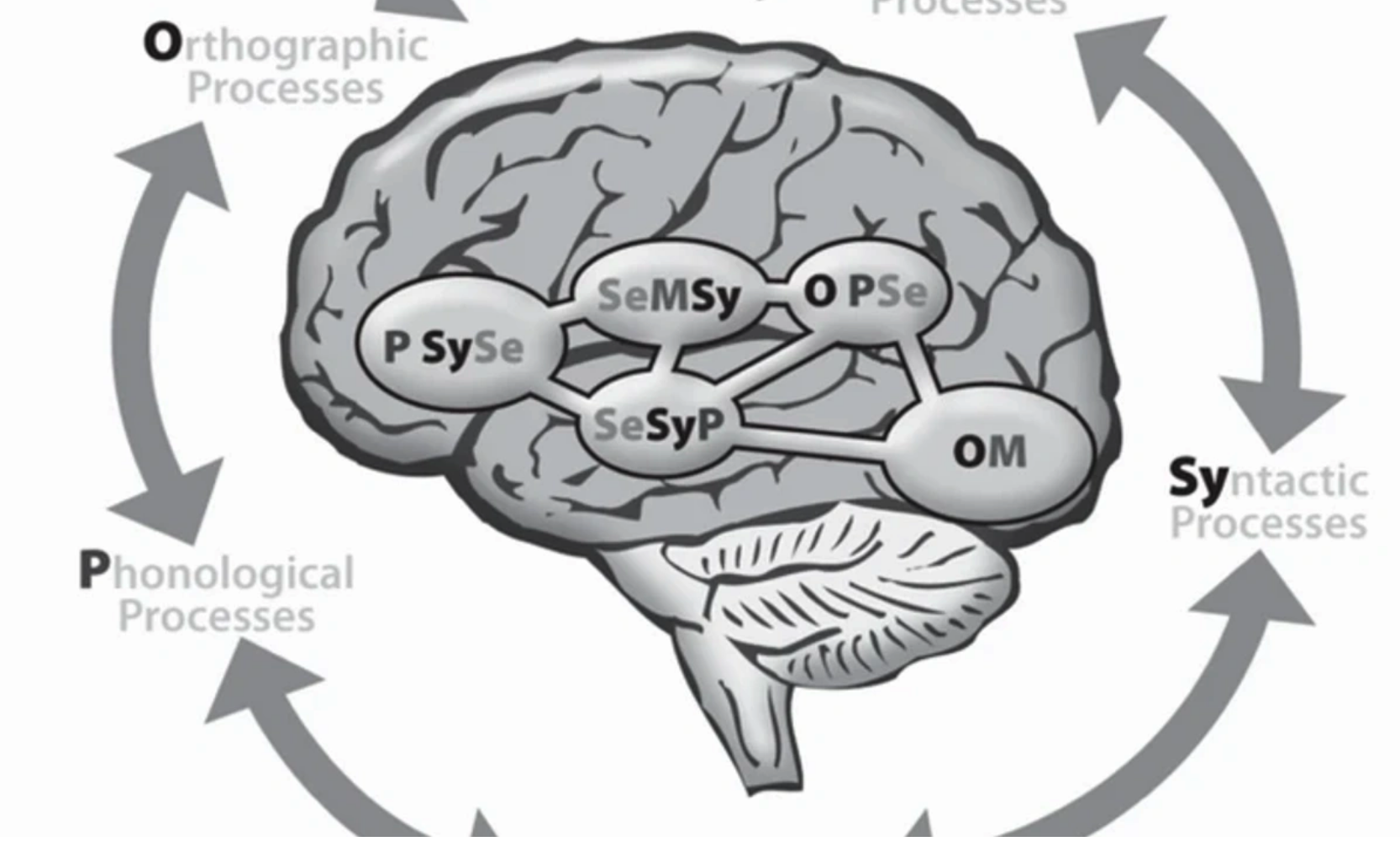
This is where POSSUM comes in, an approach developed by Dr. Maryanne Wolf, one of the leading researchers on the reading brain. I don't wait until phonics is "done" to bring it in. I use POSSUM and phonics together, at the same time, from the start, because what I love about POSSUM is that it's built on the foundations of language:
Phonology, the sounds in a word
Orthography, how the word looks in writing
Syntax, how the word functions in a sentence
Semantics, what the word actually means
Understanding, how the word is used in real context
Morphology, the meaningful parts inside a word, like prefixes, roots, and endings
POSSUM doesn't teach these one at a time and hope they add up. It connects them, the same way a fluent reader's brain connects them automatically. That's the piece that let me finally bridge the language world and the literacy world for my clients, and it's where I actually start seeing change that goes beyond phonological change. Real change.
What This Looks Like In The Room
I have a client right now who can spell and read CVC words (simple three-letter words like tap, lap, jam, and ram) without blinking. That foundation, her letter sounds, her decoding/encoding, was built using Orton-Gillingham. Now that she has that foundation, I use both Orton-Gillingham and POSSUM together to strengthen her phoneme awareness while also bringing in the other parts of language POSSUM covers.
Here's what that actually looks like. When I introduce a new target word, I don't always start with the letters or the sounds. Often I start with meaning. Take the word bat. Before we ever get to spelling it, I want to know: does she know what bat means? Does she know a bat can be something you swing at a baseball game, or the flying animal that comes out at night? Can she tell the difference between bat as a noun (I hit the ball with my bat) and bat as a verb (she's batting right now)? When she's reading a story and the word bat shows up, can she pause and figure out which meaning fits, based on what's happening in the story? And there's one more layer: does she understand what happens when we add endings to that word, like batting or bats, and how those endings change its meaning and function? Only alongside all of that do we also work on spelling it and hearing its sounds. That's the deeper work we're doing, and it's a completely different skill than sounding the word out.
This isn't specific to this one word or this one client. Whether a child is just starting to build their foundational letter and sound skills, or they're further along, this same approach, word recognition plus the deeper language work (comprehension), applies at every level.
The Real Goal
Reading isn't just decoding. It's understanding what you read, connecting with it, and eventually enjoying it. My goal for every child I work with is simple: I want them to walk away not just able to read the words, but confident in what they read. That's the difference between fixing a moment of struggle and building a skill that lasts.
If your child can decode but still struggles with fluency, understanding, or confidence, I'd love to talk about what's really going on and what the next step could look like. Reach out to COIYA Literacy & Language Therapy today.